
Bulkhead materials
Vinyl, wood or steel: which bulkhead lasts?
If your bulkhead is failing, one of the first decisions is what to build the new one from. In Hampton Roads, most residential bulkheads are pressure-treated wood or vinyl, with steel and a few other materials used where conditions call for them. This guide compares the options in plain terms: what each costs relative to the others, how long it tends to last in our salty and brackish water, and which questions to ask before you sign.
The short version
| Material | Upfront cost | Typical life in salt or brackish water | Often chosen for |
|---|---|---|---|
| Pressure-treated wood | Lowest | About 15 to 25 years | Budget, repairs that match an existing wall |
| Vinyl | Moderate, usually more than wood | 50 years or more for the vinyl sheets | Most new residential bulkheads |
| Steel | Higher | About 25 to 50 years, depending on coating | High walls, heavy loads, rough water |
| Concrete | Higher | About 30 to 50 years | Engineered walls, some older neighborhoods |
| Composite or fiberglass | Moderate to high | Long, newer material | Owners who want low upkeep |
Lifespans vary a lot with how well the wall was built, how much wave and boat wake it takes, and what lives in your water. For local price ranges, see our bulkhead cost guide.
1. Pressure-treated wood
Timber has been the standard in Tidewater for generations. The wall is built from treated pilings driven into the bottom, horizontal boards called wales, and treated sheathing boards that hold back the soil.
- Pros: lowest upfront cost, familiar to every marine contractor, easy to repair in sections.
- Cons: shorter life. Wood below the waterline can be attacked by marine borers such as shipworms in saltier water, and boards eventually rot, split or loosen.
- Ask about: the treatment level of the lumber. Wood for salt water should be rated for marine use, which is a heavier treatment than lumber for a backyard deck.
2. Vinyl
Vinyl sheet piling has become the most common choice for new residential bulkheads in many waterfront communities. Interlocking vinyl panels are driven into the bottom and held in place by a timber frame of pilings and wales.
- Pros: the vinyl itself does not rot, rust or get eaten by borers, and it needs little upkeep.
- Cons: usually costs more than wood up front. Not every vinyl product is equal, and thin panels can crack or bow on taller walls.
- Good to know: most “vinyl” bulkheads still use treated wood for the pilings, wales and tiebacks. Those wood parts can wear out before the vinyl does, so ask what the frame is made of and how it is protected.
3. Steel and aluminum
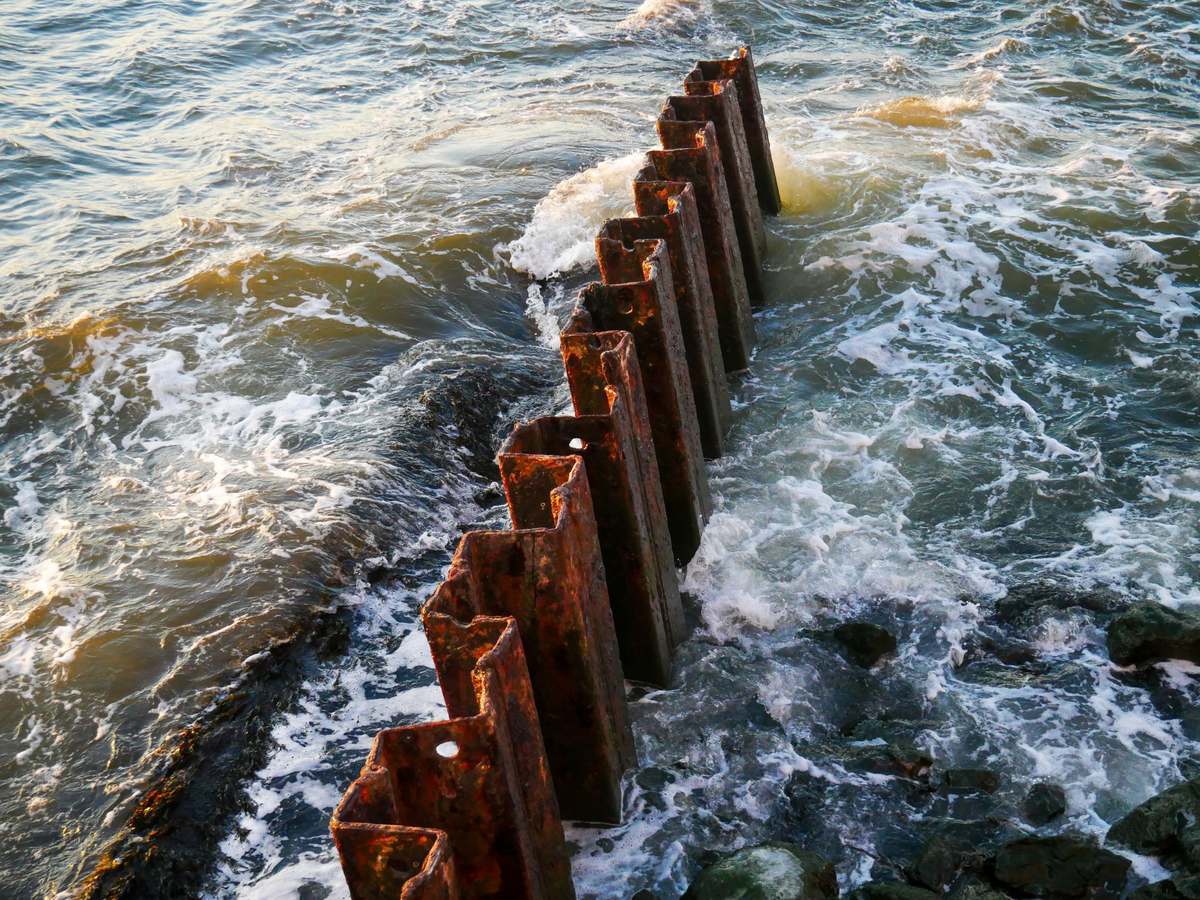
Steel sheet piling is strong and is used where a wall must hold back a lot of soil, carry heavy loads, or stand up to open water. It is more common on commercial and marina projects than at private homes.
- Pros: very strong, good for tall walls and difficult sites.
- Cons: higher cost, needs heavier equipment, and salt water causes rust over time. Coatings help, and the coating system matters as much as the steel.
- Aluminum: lighter and resists rust better than bare steel, but it is less common here and fewer local crews install it.
4. Concrete, composite and other options
- Concrete: long lasting when designed well, but heavy, costly to build and hard to repair. You will see older concrete walls in some neighborhoods.
- Composite or fiberglass sheet piling: a newer option that does not rot or rust. It costs more than vinyl in most cases and fewer contractors have long experience with it.
- Rip rap or a living shoreline: not a wall at all, but on many properties stone or a living shoreline protects the bank for less money and longer. Virginia prefers living shorelines where they will work, so it is worth asking about before you assume you need a bulkhead.
5. The parts that matter as much as the material
A well built wood bulkhead can outlast a poorly built vinyl one. Whatever material you choose, ask your contractor about:
- Depth of the sheeting and pilings. Deeper embedment keeps the wall from kicking out at the bottom.
- Tiebacks and anchors behind the wall, and how far back they go.
- Filter fabric behind the wall, which keeps soil from washing out through the joints. Lost soil and sinkholes behind a wall are a common early failure.
- Hardware. Hot dipped galvanized or stainless bolts last far longer in salt water than plain steel.
- Height. With rising water and storm tides, ask whether the new wall should be built higher than the old one, and what the permit allows.
- Warranty, both on the material and on the workmanship.
6. Permits
Replacing a bulkhead still needs a permit. Replacing a wall in about the same place is usually simpler than building a new one where none existed, and building out in front of the old wall can trigger more review. Applications go through the Joint Permit Application shared by VMRC, the Army Corps of Engineers and your local wetlands board. Our permits guide explains the steps, and most contractors handle the paperwork for you.
Compare estimates side by side
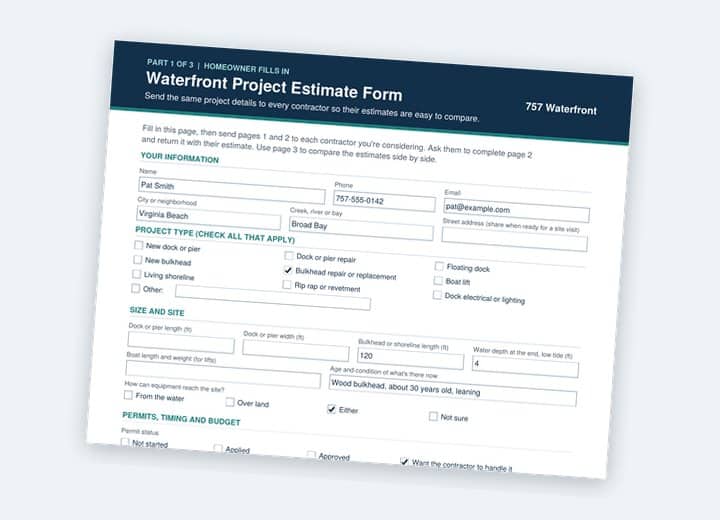
Bulkhead estimates are hard to compare when one quote lists the material and another lists the hardware. Our free contractor estimate form asks every contractor the same questions, including material, license, insurance, permits, price and warranty.
Free tool
Getting estimates?
Three estimates rarely quote the same job. Our free printable form gets every contractor to answer the same questions, including license, insurance, permits, price and warranty, so you can compare them side by side.
Find a contractor
By type of work: Bulkheads and seawalls · Rip rap and shoreline · Living shorelines
By area: See contractors by city
This guide is general information, not engineering advice. Every site is different, so rely on a licensed contractor or engineer for your project. Lifespans are typical ranges from industry cost guides and depend on construction quality and site conditions. Last reviewed October 2026.