Hampton waterfront
Dock, bulkhead and boat lift contractors in Hampton
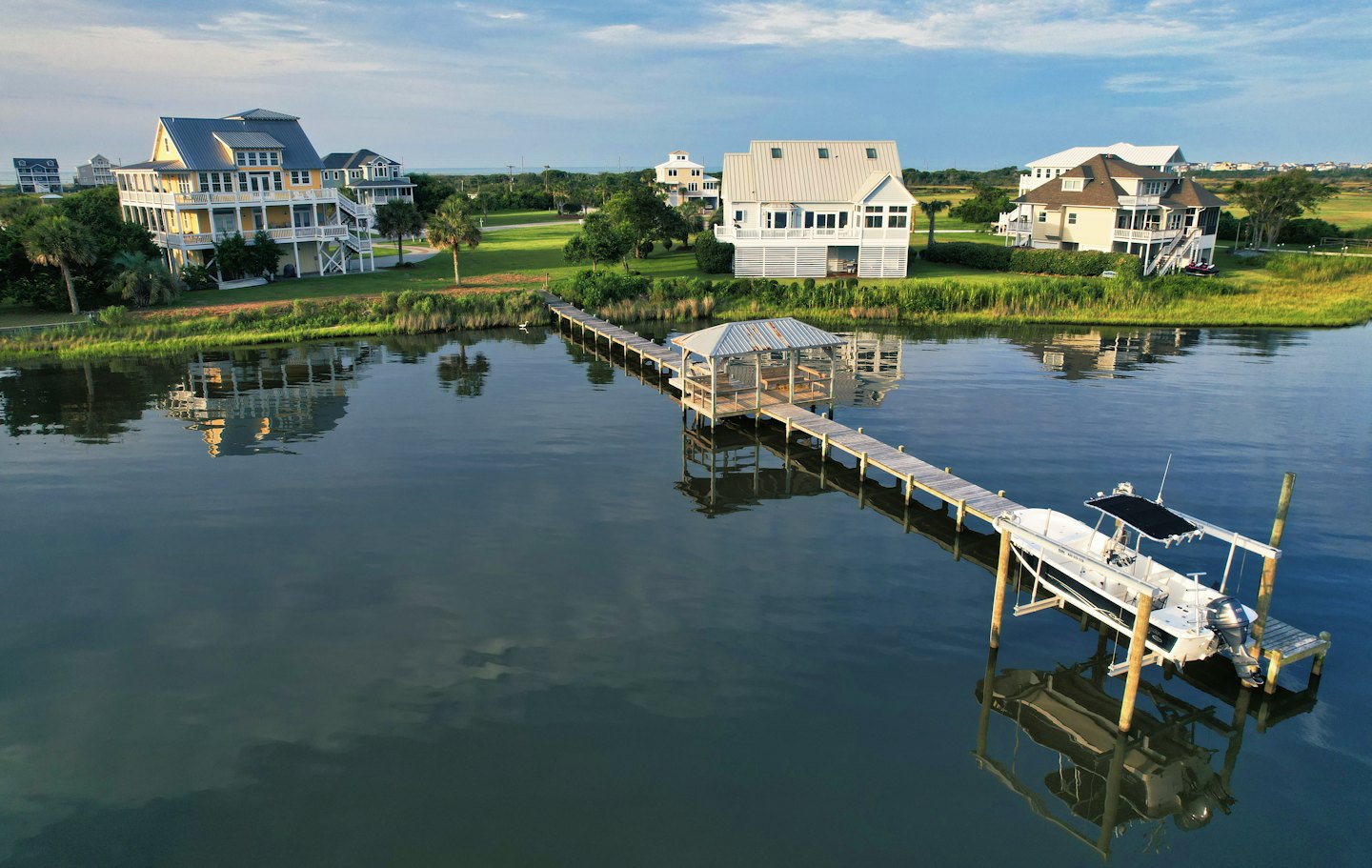
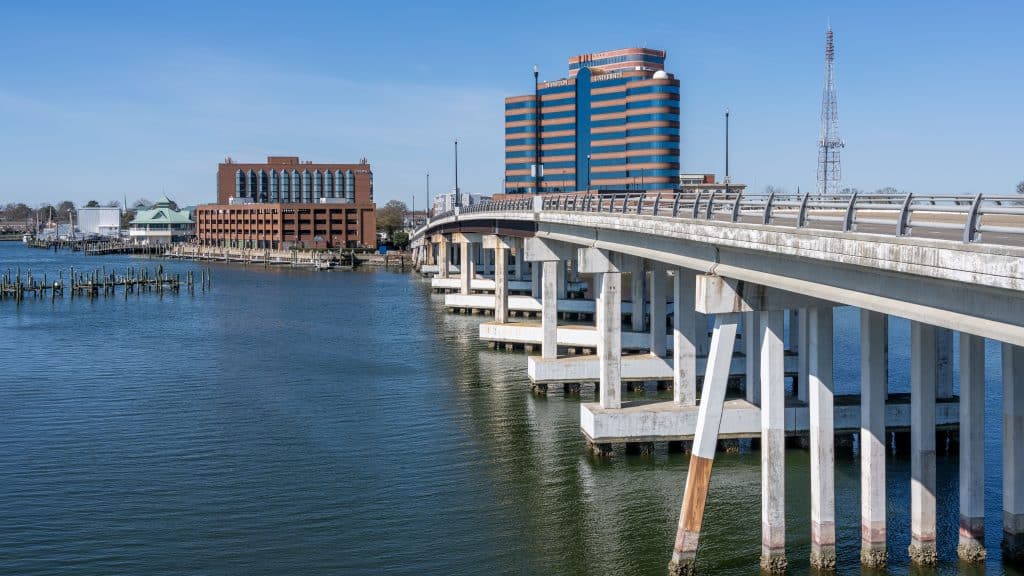
Hampton waterfront owners file about 40 permit applications a year in state records, about a third of them on the Hampton River. Most involve piers and boat lifts, and living shorelines are about twice as common as bulkheads, along with riprap and some dredging, from the Back River and Fox Hill to the Salt Ponds and the Chesapeake Bay shoreline at Buckroe Beach. The contractors below serve Hampton. Contact them directly; there are no lead forms and no middleman.
Hampton marine contractors

- 804-695-4963
- 757-463-1735
- (757) 484-0308
- (757) 617-4210
- (757) 868-1255


- (757) 982-8082
- 757-818-3378
757 Waterfront is a free directory, not a contractor. A listing isn’t an endorsement. Each listing shows the contractor’s Virginia license as the state lists it (what the badges mean); always check insurance and references before you hire. Permit figures are from Virginia Marine Resources Commission application records, 2023 to 2025.
Plan your project
Permits and planning in Hampton
Most waterfront projects in Hampton start with a Joint Permit Application, filed online through the Army Corps and shared with the state agencies and the city. Work in tidal wetlands goes before the Hampton Wetlands Board, which usually meets at 5 p.m. on the fourth Tuesday of the month in City Council Chambers, 8th floor of City Hall, 22 Lincoln Street, with a site visit at 4 p.m. the Tuesday before. Complete applications are due about five weeks ahead, and the city posts each year’s hearing schedule. Each agency collects its own fee, so confirm the local fee with Community Development at (757) 727-8311. Each permit sets a completion date, one to two years out in recent approvals, and an extension has to be requested in writing before it expires. Many private pier projects never need a board hearing at all; staff review every application and send only those that affect tidal wetlands to the board.
If you are planning shoreline protection, expect the review to ask whether a living shoreline would work before a bulkhead is approved; the city notes that living shorelines are the required option where the site supports them. Building or clearing in the 100 foot Chesapeake Bay Act buffer, part of the city’s Chesapeake Bay Preservation Overlay, has to meet the rules for a permitted encroachment or get an exception from the Board of Zoning Appeals ($100 for a single family home). Talk with Community Development early, before you apply for a building permit. See what happens after you apply.
Help paying for it: Hampton works with the Colonial Soil and Water Conservation District on the Virginia Conservation Assistance Program, which can reimburse qualifying owners up to 80 percent of a living shoreline’s cost, up to $30,000. In one Hampton project finished in 2025, about 200 feet of living shoreline cost about $74,000, and VCAP plus James River Association funding brought the owner’s share to about $4,000. Funding is limited each year. To start, fill out the site visit request form on the district’s VCAP page or call the city’s Resiliency Officer at (757) 728-5230, and apply before any work begins. For a free look at an erosion problem first, the state’s Shoreline Erosion Advisory Service will visit your property and recommend a fix. Most contractors handle the permit paperwork, so ask when you get an estimate.
The Bay Act buffer: what you can build →
Do I need a permit for a dock? →
Bulkhead costs →
Dock and pier costs →
After a storm: what to check →
Free tool
Getting estimates?
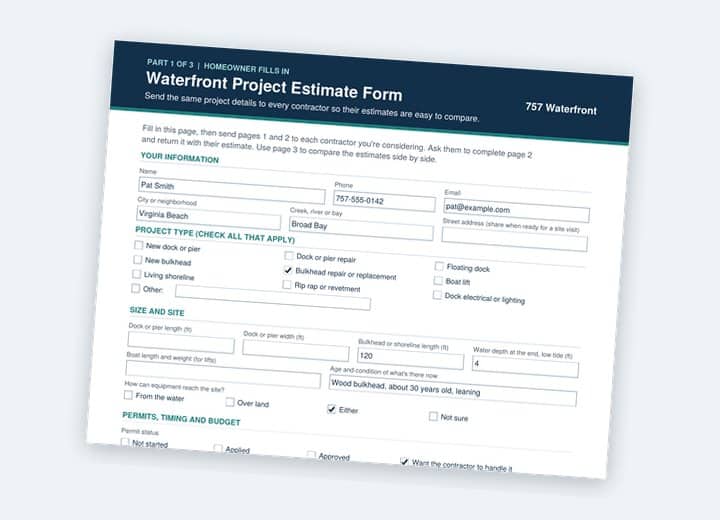
Three estimates rarely quote the same job. Our free printable form gets every contractor to answer the same questions, including license, insurance, permits, price and warranty, so you can compare them side by side.