
Middlesex waterfront
Dock, bulkhead and boat lift contractors in Middlesex
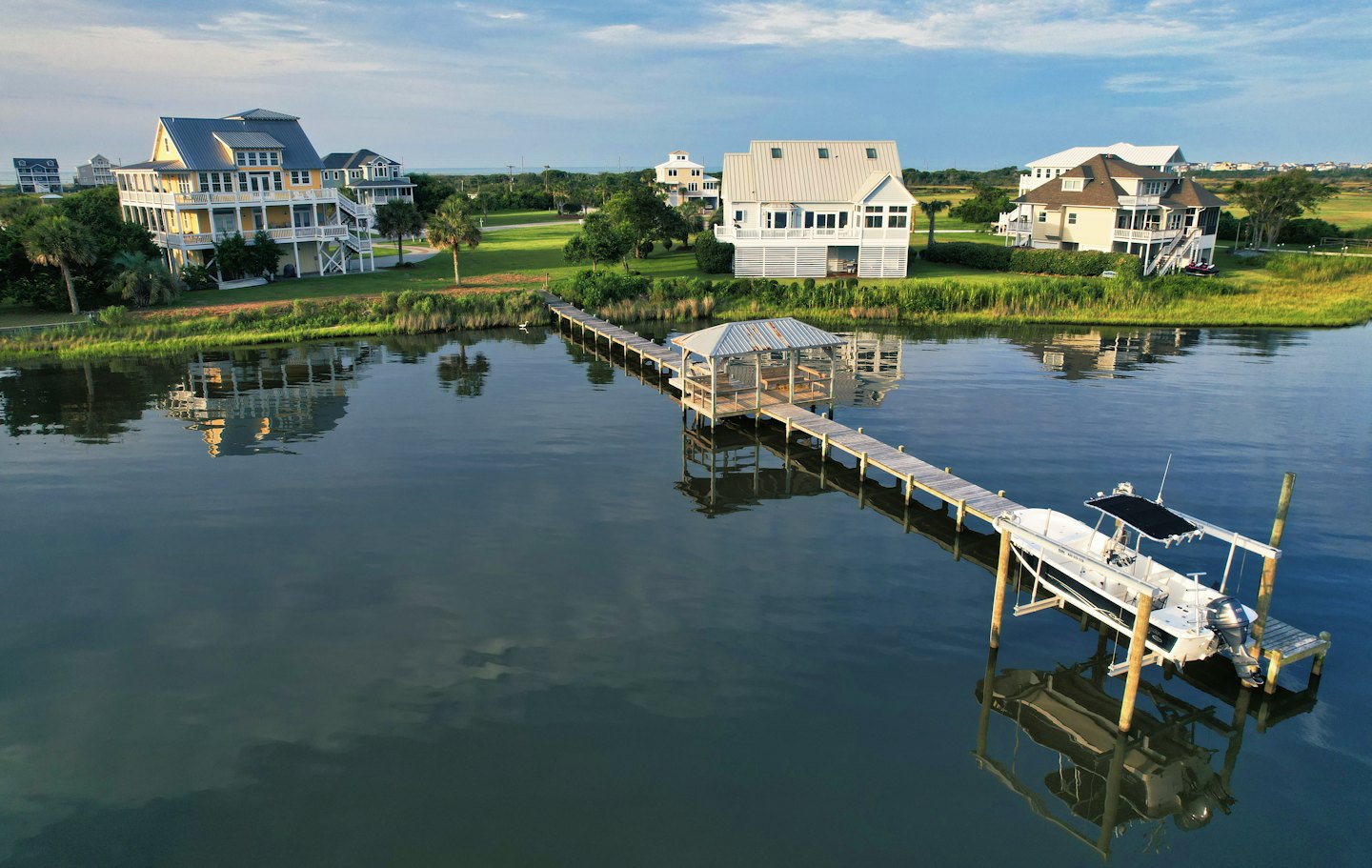
Middlesex County sees about 145 waterfront permit applications a year in state records, most of them on the Piankatank and Rappahannock Rivers and creeks like Meachim, Jackson, Sturgeon and Urbanna. Piers and boat lifts lead, and living shorelines and riprap are each about twice as common here as new bulkheads. Below are local marine contractors who serve Middlesex. Contact them directly; there are no lead forms and no middleman.
Middlesex marine contractors
757 Waterfront is a free directory, not a contractor. A listing isn’t an endorsement. Each listing shows the contractor’s Virginia license as the state lists it (what the badges mean); always check insurance and references before you hire. Permit figures are from Virginia Marine Resources Commission application records, 2023 to 2025.
Plan your project
Permits and planning in Middlesex
Most waterfront projects in Middlesex County start with a Joint Permit Application, filed online through the Army Corps and shared with the state agencies and the county. Work in tidal wetlands goes before the Middlesex County Wetlands Board, which holds its public hearings at 10 a.m. on the second Tuesday of the month in the Board Room of the Historic Courthouse in Saluda. The county posts each meeting’s agenda ahead of time. At the hearing, staff presents first, then the applicant, then the public. For the current fee and filing deadline, call the county’s Environmental Officer through the county office at (804) 758-4330.
Recent Middlesex agendas show the range: bulkheads replaced in the same footprint, riprap repairs and new revetments, low profile groins, stone sills with sand, marsh sills, Group 2 living shorelines and stacked fabric bags planted along an eroding bank. If you are planning shoreline protection, expect the review to ask whether a living shoreline would work before a bulkhead is approved. See what happens after you apply.
The 100 foot buffer: Middlesex enforces the Chesapeake Bay Act buffer along tidal shores through its own county permits. Clearing for a view, building a path or stairs to the water, or shoreline erosion work in the buffer needs an RPA modification permit ($175). Building into the buffer on certain older lots needs an encroachment permit ($200), and anything beyond that needs an exception from the Board of Zoning Appeals ($500). Disturbing more than 2,500 square feet also requires a certified land disturber and a bond. Questions go to the Planning Department at (804) 758-3382.
Help paying for it: the Middle Peninsula Planning District Commission’s Fight the Flood program offers low interest loans for living shorelines, with grants when funding is available. Apply before you hire. For a free look at an erosion problem first, the state’s Shoreline Erosion Advisory Service will visit your property and recommend a fix. Most contractors handle the permit paperwork, so ask when you get an estimate.
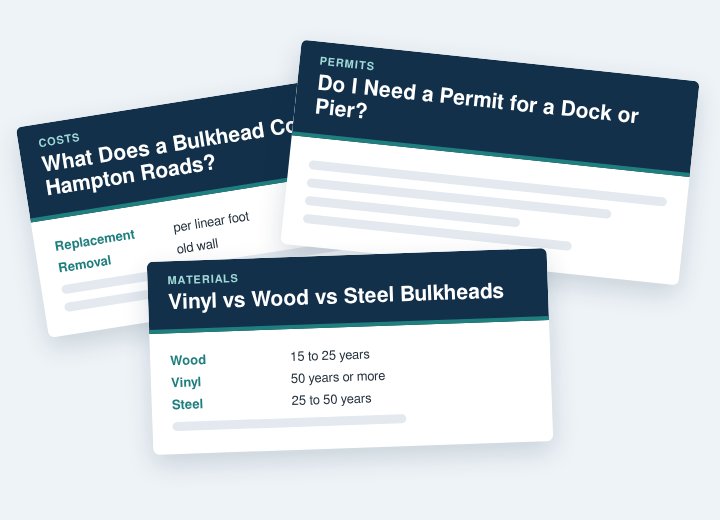
The Bay Act buffer: what you can build →
Do I need a permit for a dock? →
Bulkhead costs →
Dock and pier costs →
After a storm: what to check →
Free tool
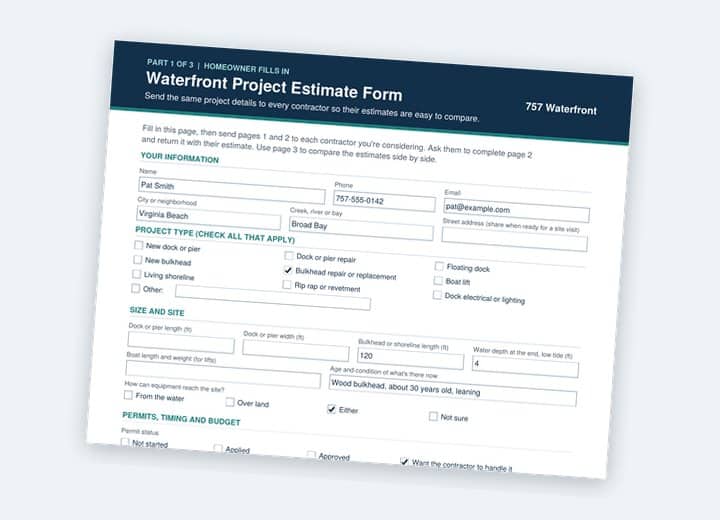
Getting estimates?
Three estimates rarely quote the same job. Our free printable form gets every contractor to answer the same questions, including license, insurance, permits, price and warranty, so you can compare them side by side.