Williamsburg waterfront
Dock, bulkhead and boat lift contractors around Williamsburg
James City County and Williamsburg see about 37 waterfront permit applications a year in state records, most on the Chickahominy River, the James River and Powhatan Creek, with College Creek, Diascund Creek and the York River side as well. Piers lead, and about one in five applications includes a bulkhead, several times the share on the Middle Peninsula. The contractors below serve the Williamsburg area. Contact them directly; there are no lead forms and no middleman.
Williamsburg-area marine contractors
757 Waterfront is a free directory, not a contractor. A listing isn’t an endorsement. Each listing shows the contractor’s Virginia license as the state lists it (what the badges mean); always check insurance and references before you hire. Permit figures are from Virginia Marine Resources Commission application records, 2023 to 2025.
Plan your project
Permits and planning around Williamsburg
Most waterfront projects start with a Joint Permit Application, filed online through the Army Corps and shared with the state agencies and the county. In James City County, work in tidal wetlands goes before the Wetlands Board, which meets at 5 p.m. on the second Wednesday of most months (none in May or September) at the County Government Center, 101 Mounts Bay Road, Building F. You apply through the county’s JCC PermitLink at least six weeks before the meeting, and the county posts each meeting’s application and payment deadlines. The county’s wetlands fee depends on how much wetland a project affects; its Stormwater and Resource Protection Division reviews applications and can quote it at (757) 253-6670. Projects inside the City of Williamsburg go through the city instead.
Expect the review to ask whether a living shoreline would work before a bulkhead is approved. The 100 foot Chesapeake Bay Act buffer is strict here: the county says most new uses in it are prohibited unless they are water dependent or redevelopment. Decks, pools, patios, garages and retaining walls in the buffer regularly go before the county’s Chesapeake Bay Board for an exception, the same evening as the wetlands board, and work done without approval can end up there too. On open stretches of the James, some owners use an offshore stone breakwater with sand placed behind it, which also goes before the wetlands board. Land disturbance over 2,500 square feet also needs a plan of development review. See what happens after you apply.
Help paying for it: the James River Association’s Living Shoreline Cost Share Program covers 75 percent of construction costs for eligible homeowners on tidal water in the lower James River watershed, plus a free site visit, design, permitting help and three years of maintenance. Check your address on its map, and expect the process to take 12 to 18 months. Properties on the York River side aren’t covered. For a free look at an erosion problem first, the state’s Shoreline Erosion Advisory Service will visit your property and recommend a fix. Most contractors handle the permit paperwork, so ask when you get an estimate.
The Bay Act buffer: what you can build →
Do I need a permit for a dock? →
Bulkhead costs →
Dock and pier costs →
After a storm: what to check →
Free tool
Getting estimates?
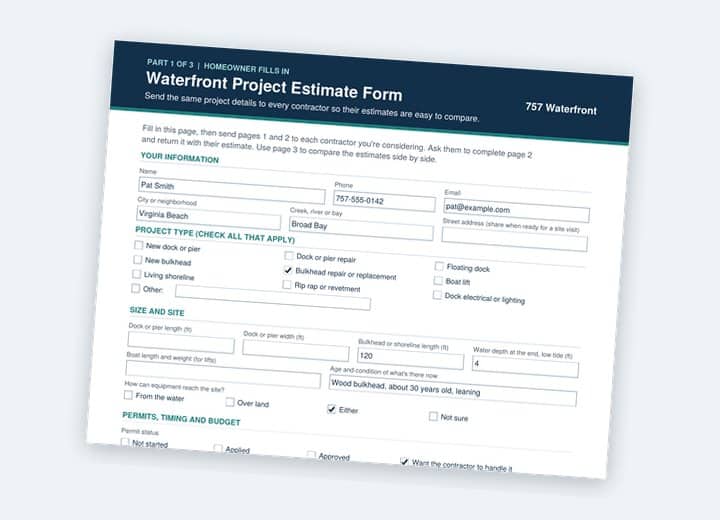
Three estimates rarely quote the same job. Our free printable form gets every contractor to answer the same questions, including license, insurance, permits, price and warranty, so you can compare them side by side.