
Free checklist for buyers
Know what you’re buying before you make an offer
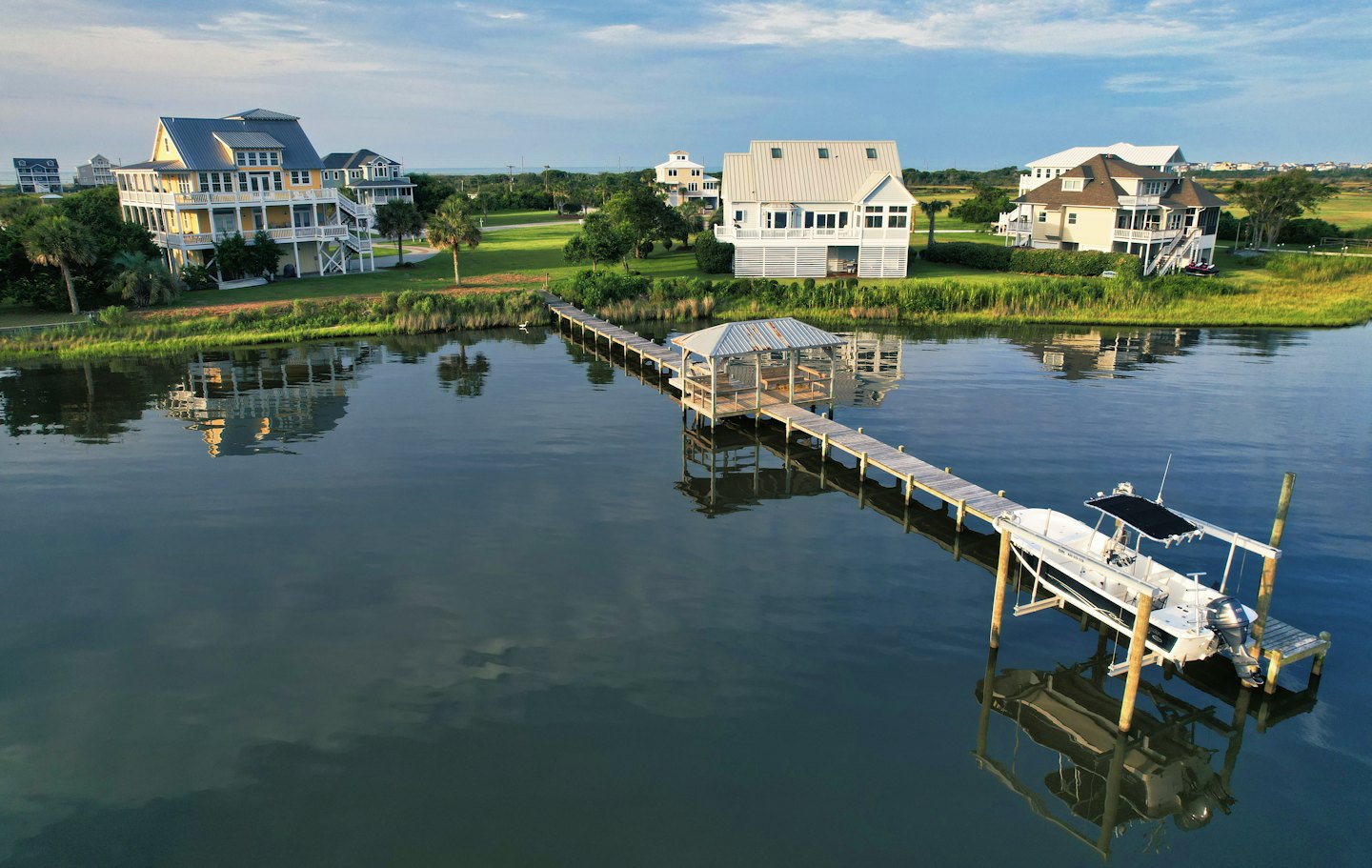
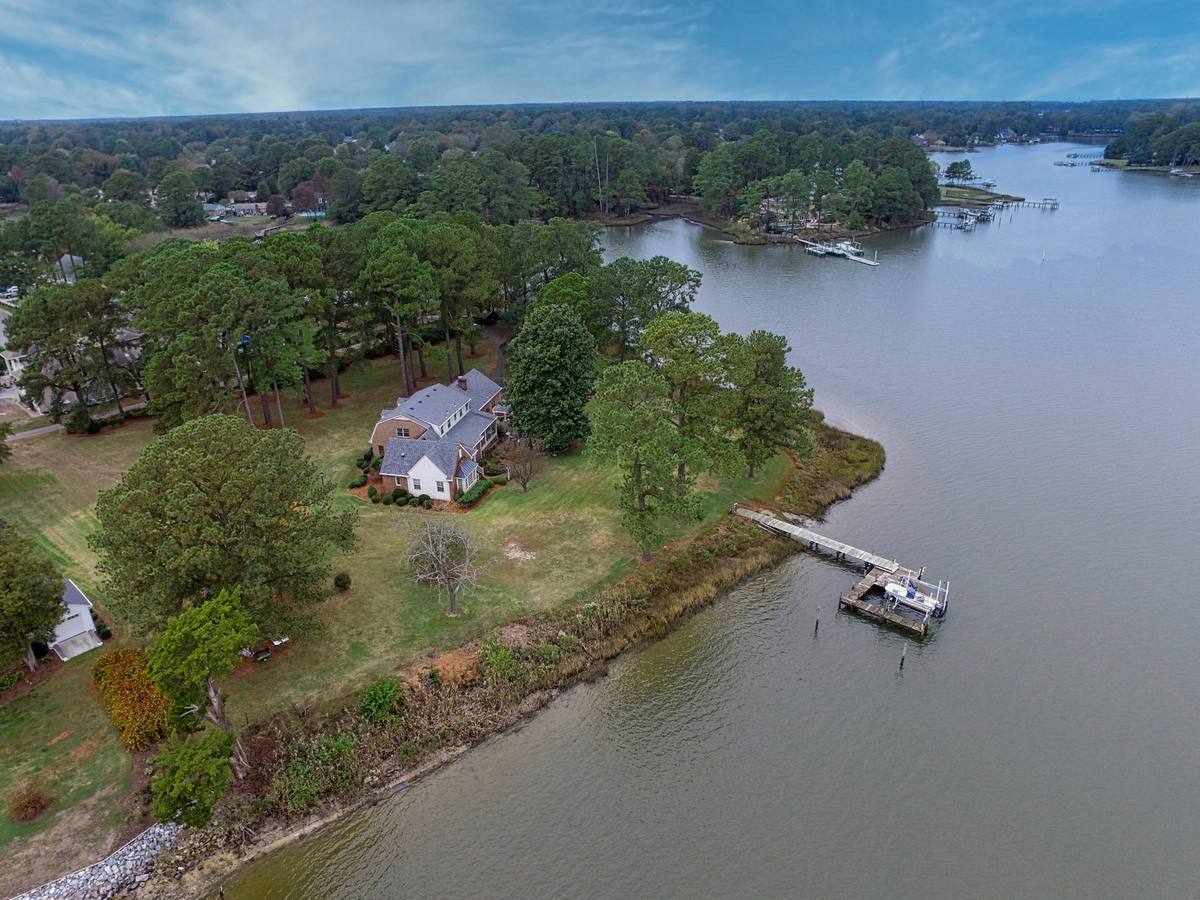
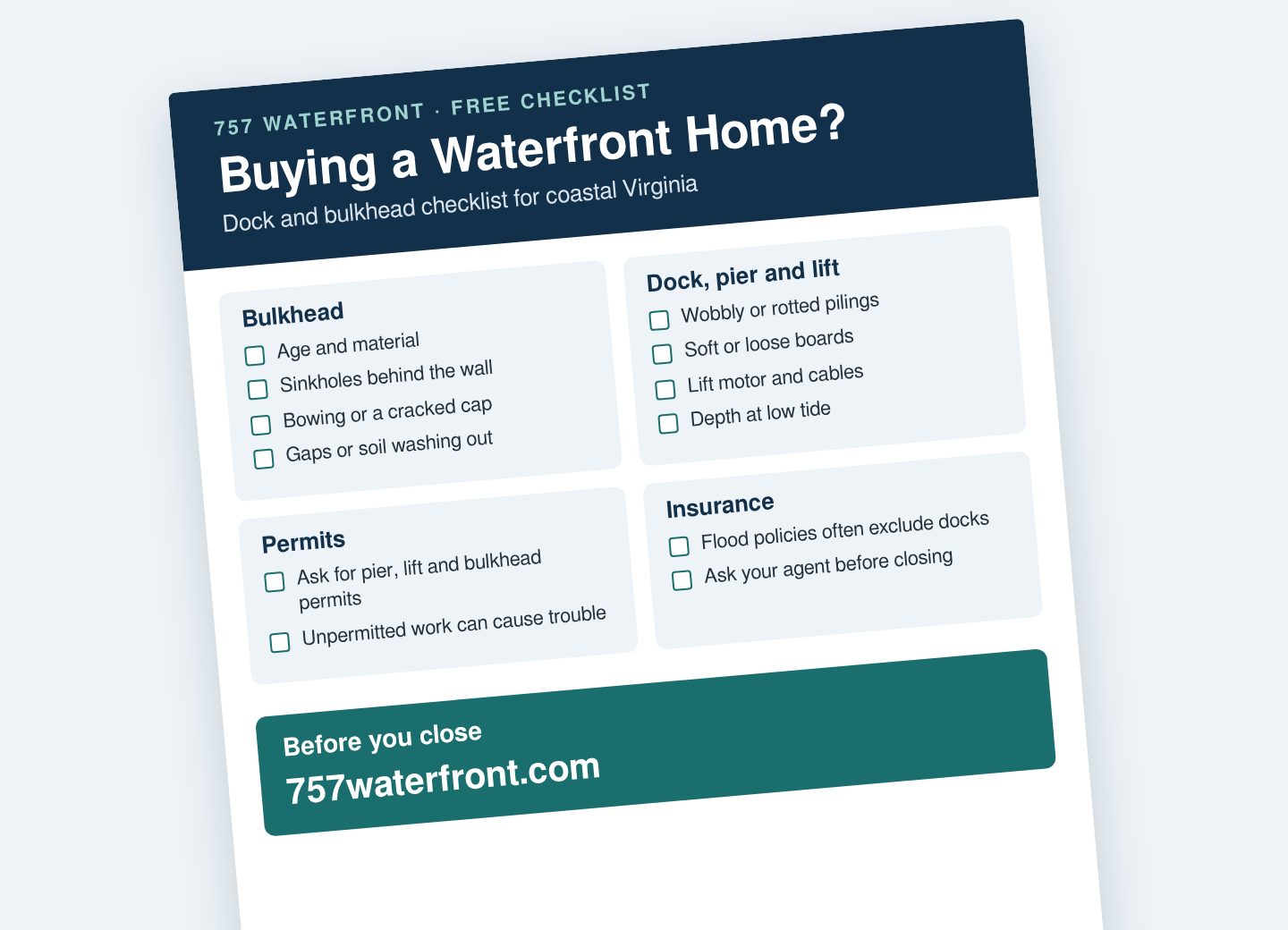
On the water, you’re buying the bulkhead, dock and boat lift too. They can cost tens of thousands of dollars to repair or replace, and most general home inspections don’t look at them closely. Use this checklist to walk the shoreline before you make an offer.
One page, free to print. Realtors, loan officers and home inspectors are welcome to share it with clients.
Bulkhead
The bulkhead holds your yard in place, so it is usually the most expensive structure on a waterfront lot to replace. Ask the seller how old it is and what it’s made of. In salt or brackish water, pressure treated wood typically lasts about 15 to 25 years, and vinyl sheets can last 50 years or more.
- Sinkholes or soft spots in the yard behind the wall. This usually means soil is washing out through the wall.
- Bowing or leaning toward the water, or a cracked or tilted cap along the top.
- Gaps between boards or panels, or soil and sand visible on the water side.
- Rusted or missing hardware and tiebacks.
For more detail, see how long a bulkhead lasts and the signs it’s failing and vinyl vs wood vs steel bulkheads.
Dock, pier and boat lift
- Pilings that wobble when you push on them, or that are rotted or thin at the waterline.
- Decking that is soft, loose or cracked, and hardware that is badly rusted.
- Boat lift age, capacity, motor and cables. Ask whether it has been serviced and whether it fits the boat you plan to keep.
- Water depth at low tide at the end of the pier. A pier that looks great at high tide may leave your boat sitting in the mud at low tide.
For prices, see what a dock or pier costs and boat lift costs and options.
Permits
Ask the seller for permits on the pier, boat lift and bulkhead. Most of these structures in tidal water go through a Joint Permit Application, and many localities also require a building permit. A structure built without the right approvals can cause trouble when you repair it, insure it or sell the house later.
See do I need a permit for a dock or pier in Virginia and our guide to waterfront permits.
Insurance and storm history
- Standard flood insurance generally does not cover docks, piers or bulkheads. Ask your insurance agent what is and isn’t covered before you close.
- Ask about storm damage and repairs from past hurricanes and nor’easters, and who did the work.
Our hurricane and storm damage guide shows what storm damage looks like.
Before you close
If anything on this list looks questionable, get a licensed marine contractor to look at it and give you a written estimate before closing. An estimate gives you real numbers to negotiate with. Our free contractor estimate form helps you compare quotes, and every contractor in our directory shows their Virginia license as the state lists it. Selling instead? See our seller’s checklist.
For realtors and inspectors
Share it with your buyers
Print the one-page checklist and hand it to buyers at a showing or inspection, or send them the link. It’s free to share as long as it stays unchanged.
Free tool
Getting estimates?
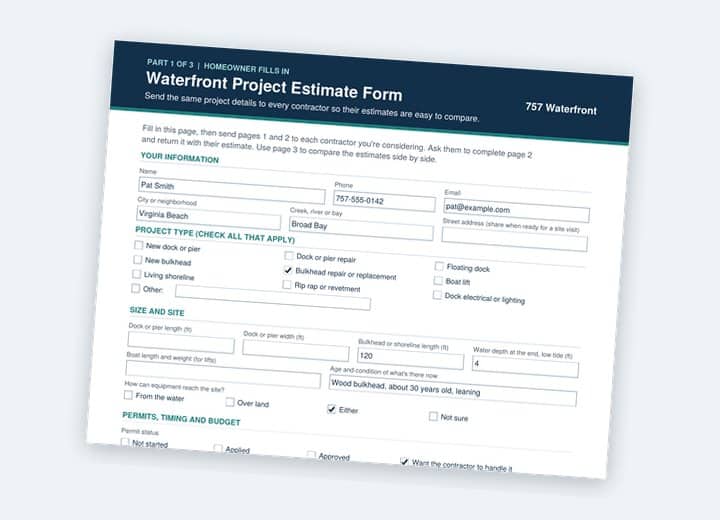
Three estimates rarely quote the same job. Our free printable form gets every contractor to answer the same questions, including license, insurance, permits, price and warranty, so you can compare them side by side.
Find a contractor
By type of work: Bulkheads and seawalls · Docks and piers · Boat lifts
By area: See contractors by city
This checklist is general information, not a property inspection, engineering advice or legal advice. Every shoreline is different, so rely on a licensed contractor, inspector or engineer for the property you’re buying, and confirm insurance coverage with your agent. Lifespans are typical ranges and depend on construction quality and site conditions. Last reviewed October 2026.